
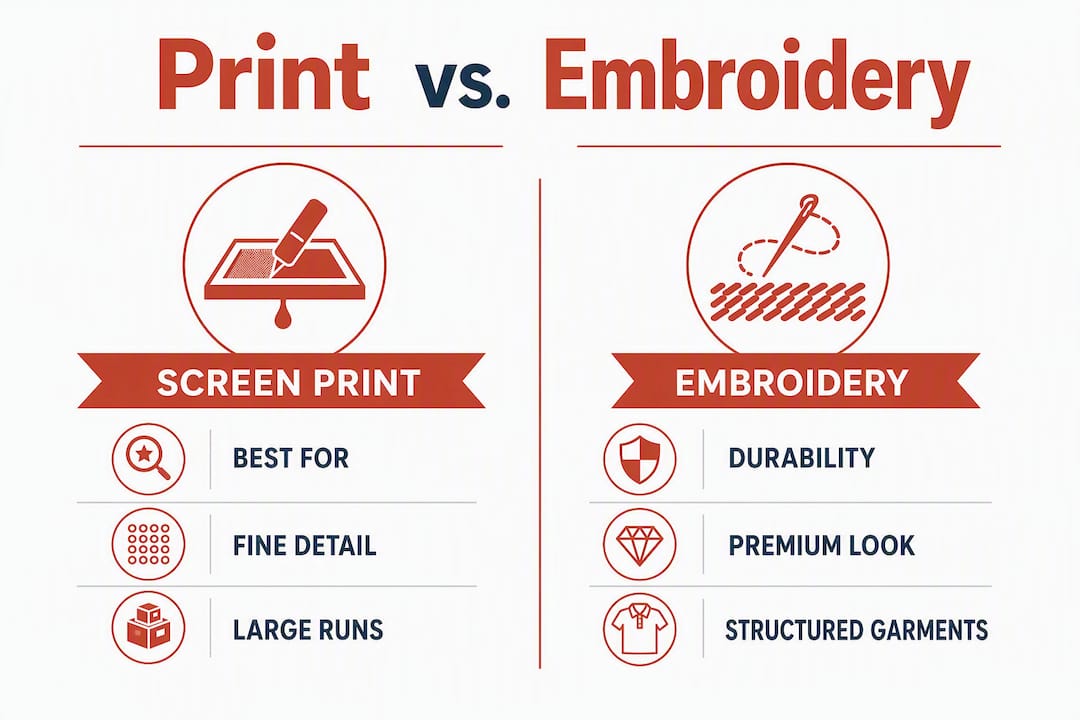
Pick embroidery for polos, hats, jackets, and long-life uniforms. Pick screen printing for bold graphics, large back prints, high-color artwork, and event tees. That’s the short version, and it holds for the vast majority of projects.
The longer version matters when you’re deciding budget and quantity. For a standard 3-color design, screen printing typically becomes cheaper starting from a few dozen pieces; below that threshold, embroidery’s stitch-count pricing is often comparable or even lower per unit. Three quick exceptions worth flagging before you go further:
- Fabric weight: Embroidery can pucker or distort fabrics under roughly 140 GSM. On a lightweight tee, a quality screen print usually looks cleaner.
- Gradients and photorealistic art: Screen printing handles these; embroidery cannot reproduce gradients at all.
- Hat fronts and structured outerwear: Embroidery is the near-universal default here. Screen printing on a structured cap front rarely looks right.
Table of Contents
- How do screen printing and embroidery compare side by side?
- What is embroidery and when should you use it?
- What is screen printing and when does it make sense?
- Which method actually lasts longer?
- How should you prepare artwork for each method?
- How do you care for screen-printed and embroidered garments?
- What questions should you ask before choosing a decorator?
- Which method fits your brand voice?
- Key Takeaways
- The method that actually matters is the one that fits the garment
- Already-finished apparel that skips the decoration decision entirely
- Further reading and sources
How do screen printing and embroidery compare side by side?
| Dimension | Screen Printing | Embroidery |
|---|---|---|
| Best for | T-shirts, hoodies, large graphics, event merch | Polos, caps, jackets, uniforms, workwear |
| Setup cost | $25–$75 per color per screen | $30–$100 digitizing fee (one-time) |
| Cost per unit (single) | Higher per piece at low qty due to setup | Stitch-count based; competitive at low qty |
| Cost per unit (bulk 36+) | Drops significantly; best value at scale | Stays relatively flat regardless of qty |
| Durability | Water-based: ~40–60 washes; plastisol: ~60–80 washes | Lasts the life of the garment |
| Texture/finish | Flat to slightly raised (plastisol); soft hand (water-based) | Raised, textured, three-dimensional |
| Color handling | Unlimited gradients, photorealism, fine halftones | Solid colors only; 400+ thread options, no PMS exact match |
| Fabric & placement | Best on flat, smooth fabrics; avoid nap/fuzzy surfaces | Avoid fabrics under ~140 GSM; excels on structured items |
| Detail minimums | Strokes down to ~0.2" | Minimum ~0.5" stroke, ~1" text height |
| Turnaround/minimums | Typically 7–14 days; minimums vary by shop | Adds 1–2 days for digitizing on first order; reorders faster |
| Care notes | Cold wash inside-out; avoid high heat | Gentle cycle; avoid aggressive abrasion; no direct iron on stitching |
What is embroidery and when should you use it?
Embroidery converts a digital design file into a set of machine instructions that guide needles through fabric, building up a pattern stitch by stitch. The process starts with digitizing: a technician (or software) translates your artwork into a stitch file, typically in formats like .DST, .PES, or .EMB. That file tells the machine exactly where each needle pass goes, which thread color loads, and how dense the stitching runs.
The finished result is raised and tactile. Run your finger across an embroidered chest logo on a polo and you feel the thread. That physical quality is why embroidery is the industry standard for polos, caps, fleece, and structured outerwear — it reads as premium in a way that ink on fabric simply does not.
Cost structure. The digitizing fee is a one-time charge, typically $30–$100 depending on complexity. After that, pricing is driven by stitch count, not the number of thread colors. A six-color embroidered logo costs the same to run as a two-color version at the same stitch count. That’s a meaningful advantage when your logo uses several brand colors.
Limitations to know before you commit:
- Fabrics under ~140 GSM risk puckering or distorting under the stitching weight.
- Minimum stroke width is moderate; text needs to be reasonably sized to remain legible.
- The back of the stitching can feel scratchy against skin on thin shirts, which matters for comfort-focused garments.
- Embroidery cannot reproduce gradients or photorealistic detail. Solid shapes only.
Failure mode for embroidery is mechanical: thread snags or unravels rather than fading. A well-stitched logo on a heavyweight denim jacket can genuinely outlast the jacket itself.
Pro Tip: Before approving a digitizing file, request a physical stitch-out sample on the actual blank you plan to use. A design that looks clean on screen can lose fine details when stitched on a textured surface.
What is screen printing and when does it make sense?
Screen printing, also called silkscreen printing, pushes ink through a mesh screen onto fabric. Each color in the design requires its own screen, which is why setup costs are per-color. The screens are exposed with the design using UV light, then ink is pulled across the mesh with a squeegee, depositing a precise layer onto the garment. After printing, the piece runs through a heat tunnel to cure the ink.
Three ink types dominate custom apparel:
- Discharge: — Removes the fabric dye and replaces it with pigment. On the right fabric, it can approach the garment’s own lifespan and feels almost invisible on the shirt.
Screen printing handles stroke widths down to approximately 0.2", which means fine lines, small text, and photorealistic halftones are all achievable. Gradients and full-color artwork are where screen printing has no real competition from embroidery.
Where it works best: T-shirts, hoodies, large back graphics, event merch, and any design that uses gradients or more than three or four colors. Smooth, flat fabrics like jersey cotton and cotton-poly blends give the cleanest results. Avoid heavily textured or nap surfaces — the ink won’t deposit evenly.
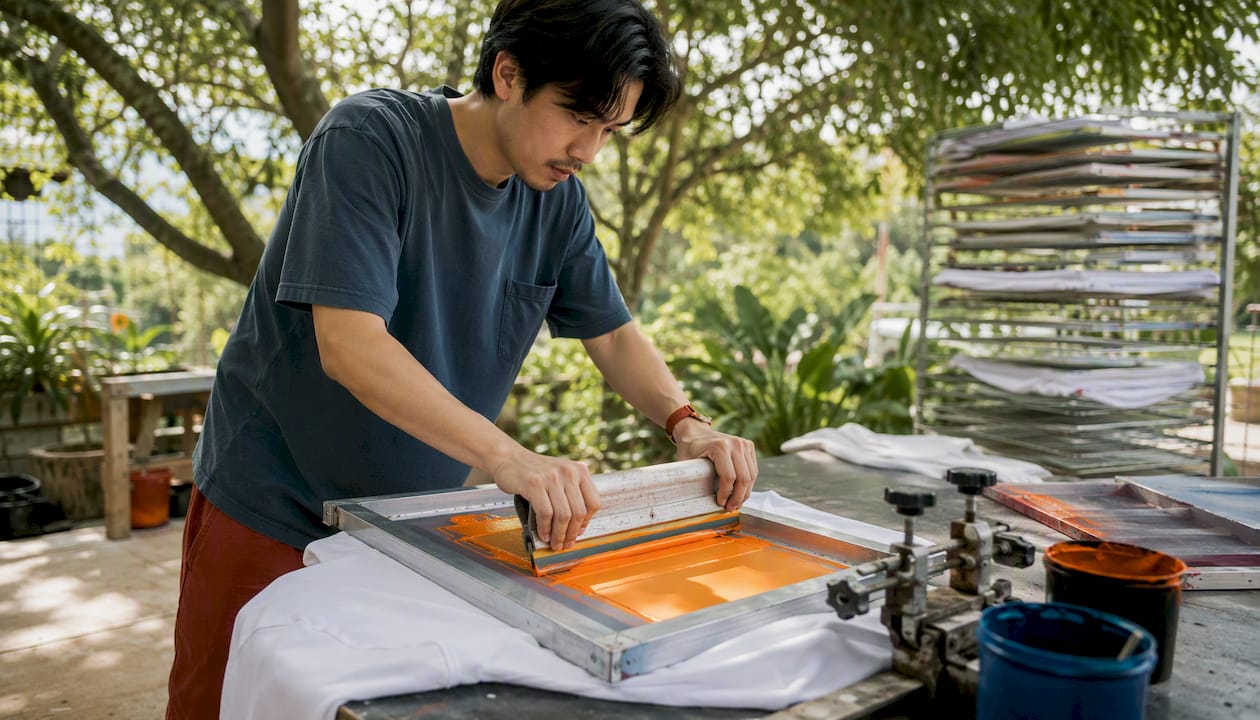
Pro Tip: Match ink type to the garment’s end use. For a retail-quality graphic hoodie meant to be worn close to skin, water-based or discharge ink gives a far better hand feel than plastisol. For a durable event tee that will see heavy washing, plastisol holds up longer.
Which method actually lasts longer?
Durability. Embroidery wins on longevity without much debate. Thread doesn’t fade. Embroidery typically lasts the life of the garment, while screen prints degrade over time depending on ink type: water-based inks hold roughly 40–60 washes, plastisol runs 60–80 washes, and discharge prints can approach garment life on the right fabric.
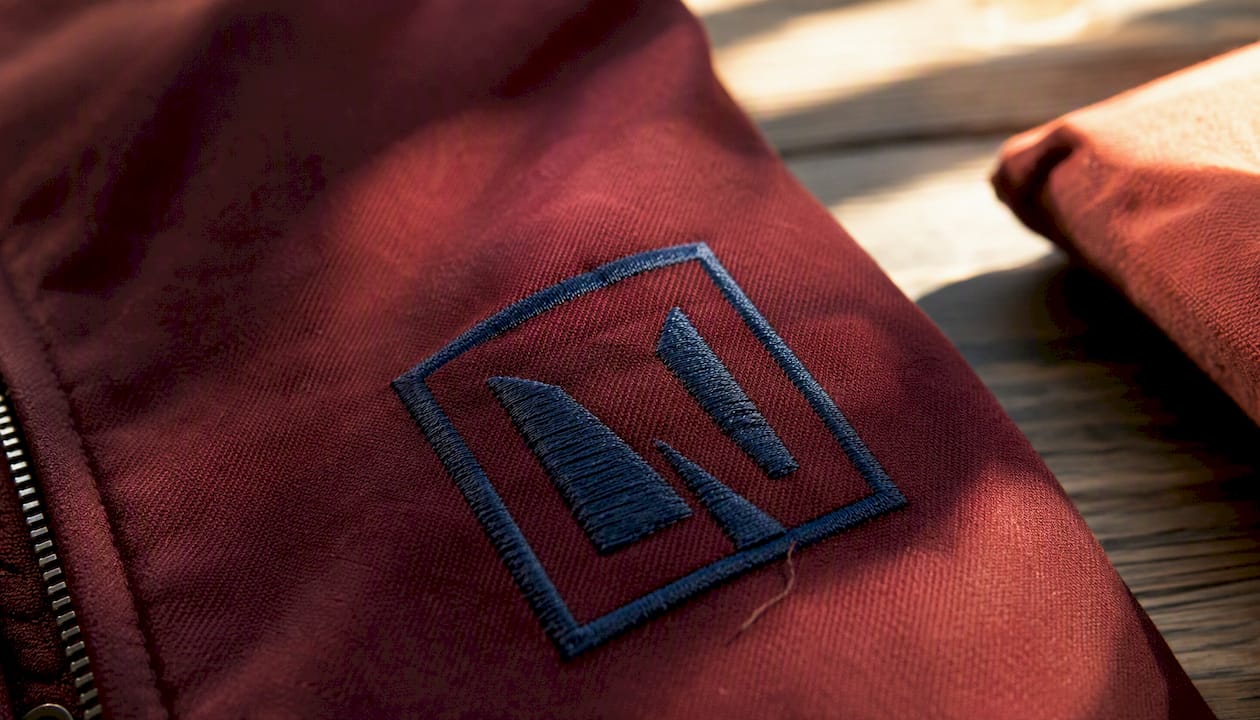
Texture and finish. These two methods produce fundamentally different aesthetics. Embroidery is raised and three-dimensional. Screen printing is flat to slightly raised (plastisol) or nearly invisible on the fabric (water-based/discharge). Neither is objectively better; they serve different brand signals.
Color and detail. Screen printing handles gradients, photorealism, and fine strokes down to 0.2". Embroidery is limited to solid, non-gradient colors, with a minimum stroke of about 0.5" and text no smaller than 1" tall. For a complex illustrated graphic, screen printing is the only realistic option.
Fabric compatibility. Embroidery struggles on fabrics under ~140 GSM because the stitching weight can pucker or distort the textile. On thin tees, a quality screen print typically gives a cleaner result. Screen printing has its own limits: fuzzy, nap, or heavily textured surfaces prevent clean ink deposit.
Cost scenarios across order sizes
| Order Size | 3-Color Screen Print (est.) | Embroidery (est.) |
|---|---|---|
| 36 pieces | High per-unit due to 3 screen setups | Competitive; digitizing amortized quickly |
| 36–48 pieces | Crossover point; roughly comparable | Stitch-count cost stays flat |
| 36+ pieces | Per-unit drops significantly | Stays relatively flat |
The crossover around 36–48 pieces is a practical rule, not a guarantee. A single-color screen print breaks even much earlier; a six-color design pushes the crossover higher.
Failure modes. Screen prints fade, crack, or peel after repeated washing, especially with aggressive detergents or high-heat drying. Embroidery rarely fades but can suffer thread breakage or snagging if caught on hardware or washed with abrasive items.
Environmental considerations. Plastisol ink contains PVC and phthalates, raising disposal concerns. Water-based and discharge inks have a lower chemical footprint but still require water in the process. Embroidery uses polyester or rayon thread, which is synthetic but produces no wastewater in the stitching process itself. Neither method is entirely clean, but water-based screen printing and embroidery are generally considered the lower-impact options.
How should you prepare artwork for each method?
Getting the file right before you send it to a decorator saves money and avoids reprints.
Embroidery file prep checklist
- Simplify small details: fine lines and gradients don’t translate to stitching. Convert them to solid shapes.
- Minimum size: 0.5" stroke width, 1" text height. Smaller than that, the stitching blurs.
- Acceptable formats for digitizing: AI, EPS, or high-resolution PNG. The digitizer converts these to .DST, .PES, or .EMB.
- Outline all fonts before submitting so the digitizer sees exact letterforms.
- Request a stitch-count estimate upfront to confirm pricing before the file is processed.
Screen printing file prep checklist
- Separate each color onto its own layer in your file. Each layer becomes a screen.
- Flatten transparencies. Semi-transparent elements need to be converted to halftone dots or solid spot colors.
- Vector artwork (AI, EPS, PDF) is preferred. Raster files need to be at least 300 DPI at print size.
- Minimum stroke width: 0.2" for clean reproduction.
- Confirm whether the shop uses spot colors or process printing, then provide PMS references for spot work.
Pro Tip: Thread palettes offer 400+ colors, but exact PMS matches are rarely possible in embroidery. Ask your decorator to show you physical thread samples against your brand swatch before approving the digitizing file. For screen printing, PMS matching is achievable with spot-color mixing, but confirm the shop’s ink-mixing capability before assuming it.
How do you care for screen-printed and embroidered garments?
How you wash a decorated garment matters more than most people expect.
Screen-printed garments:
- Wash cold, inside out. Heat is the primary enemy of ink adhesion.
- Use a gentle cycle and mild detergent. Avoid bleach entirely.
- Air dry when possible. If using a dryer, use low heat. High-heat drying accelerates cracking and peeling.
- Expected lifespan: roughly 40–60 washes for water-based ink, 60–80 for plastisol, longer for discharge on compatible fabrics.
Embroidered garments:
- Gentle or delicate cycle, cold water. The stitching itself is durable, but aggressive agitation can snag threads.
- Avoid washing with items that have hooks, zippers, or rough hardware that can catch thread.
- When ironing, never press directly on the embroidery. Iron inside-out or use a pressing cloth.
- For structured caps, hand wash and reshape while damp.
Industrial laundering (workwear). Embroidery tolerates commercial washing significantly better than screen prints. High-temperature industrial cycles degrade ink adhesion quickly; thread holds up far longer under the same conditions. For uniforms that go through commercial laundry services, embroidery is the practical default.
Quick care card for team orders:
- Wash cold, inside out
- Gentle cycle, mild detergent
- No bleach, no fabric softener on printed areas
- Low heat or air dry
- Iron inside-out only
What questions should you ask before choosing a decorator?
The method decision and the decorator decision are linked. A good decorator will help you choose correctly; a bad one will take your order regardless.
Project questions to answer before you call:
- What garment type and fabric weight are you decorating?
- How often will the item be washed, and under what conditions?
- Does the design include gradients, photorealistic detail, or fine lines?
- How many colors does the design use?
- What is your total quantity, and do you anticipate reorders?
- Are there placement constraints (hat front, sleeve, chest, full back)?
- What is your per-unit budget, including setup?
Red flags from decorators:
- Vague stitch-count estimates with no breakdown by design element.
- No digitizing proof or stitch-out sample offered before production.
- Per-piece quotes that don’t account for color count or setup fees.
- Inability to show physical samples on the same blank you’re ordering.
- No stated policy on reorder file storage.
Trust signals worth asking for:
- Photo samples of similar work on the same garment style.
- Written stitch-count or screen-count specs with the quote.
- Wash-test evidence or durability claims with ink type specified.
- Clear turnaround time and reorder terms in writing.
Using the crossover rule. If your design uses three colors and you’re ordering fewer than 36 pieces, embroidery or direct-to-garment printing is likely cheaper than screen printing once you factor in three screen setups at $25–$75 each. Above 48 pieces, screen printing’s per-unit cost drops enough to offset setup. Run the math with actual quotes before committing.
Which method fits your brand voice?
The choice between screen printing and embroidery isn’t just technical — it’s a brand signal. The method you choose communicates something before anyone reads the logo.
Streetwear and graphic-forward brands lean toward screen printing. Bold colors, oversized back graphics, distressed halftones, and photorealistic artwork are all screen-print territory. If your aesthetic lives in current streetwear trends — layered graphics, washed-out tones, expressive typography — screen printing gives you the most creative range.
Premium, corporate, and uniform-grade branding defaults to embroidery. A chest logo on a polo or a structured cap reads differently when it’s stitched versus printed. The tactile quality signals investment and permanence. For client-facing staff, corporate gifting, or any context where the garment needs to look polished after dozens of washes, embroidery is the right call.
Three quick scenarios:
- Merch drop for a streetwear label: Screen print on heavyweight cotton tees and graphic hoodies. Bold, color-rich, designed to photograph well.
- Corporate uniform order: Embroidery on polos and structured caps. Clean, professional, durable through commercial laundering.
- Seasonal collection mixing both: Embroidered chest logo on a fleece zip hoodie for a premium feel; screen-printed graphic tee as the statement piece in the same drop.
Pro Tip: Mixing methods across a single program is a legitimate strategy, not a compromise. Embroidered polos for the team, screen-printed event tees for the crowd — the contrast actually reinforces the premium tier.
Thepreciouslamb’s product range maps naturally to both methods. The denim heavyweight jacket is a natural canvas for embroidery: structured, heavy enough to hold stitching without puckering, and the kind of piece where a raised logo adds genuine visual weight. Graphic hoodies and sweatshirts in the collection suit screen printing, particularly water-based or discharge ink for a retail-quality hand feel.
Key Takeaways
Screen printing wins on color range and bulk value; embroidery wins on durability and premium finish — match the method to the garment, the design, and the order size.
| Point | Details |
|---|---|
| Embroidery for structured pieces | Use embroidery on polos, caps, and jackets; it lasts the life of the garment and reads as premium. |
| Screen print for graphics and volume | Screen printing becomes cost-effective around 36–48 pieces for a 3-color design and handles gradients embroidery cannot. |
| Fabric weight is a hard limit | Avoid embroidery on fabrics under ~140 GSM; lightweight tees almost always look better screen printed. |
| Total cost includes setup | Factor in digitizing fees ($30–$100) or per-color screen costs ($25–$75 per screen) before comparing per-unit prices. |
| Thepreciouslamb product fit | The denim heavyweight jacket suits embroidery; graphic hoodies and sweatshirts pair well with screen printing. |
The method that actually matters is the one that fits the garment
Most decoration guides spend too much time ranking the two methods against each other and not enough time on the one question that actually determines the outcome: what is the garment, and what is it for?
Embroidery on a thin jersey tee is a mistake regardless of how premium the brand is. Screen printing on a structured polo cap is technically possible and almost always looks cheap. The method is not the decision — the garment is. Once you know the fabric weight, the placement, and the wash frequency, the right method usually picks itself.
The other thing worth saying plainly: digitizing quality is where embroidery orders succeed or fail. A well-digitized file on a good blank looks genuinely excellent. A poorly digitized file on the same blank looks like a craft project. Demand a stitch-out sample before approving production. That single step separates a decorator who knows what they’re doing from one who doesn’t.
For anyone building a mixed program — say, embroidered outerwear for the core team and screen-printed tees for a launch event — the combination is often stronger than committing to one method across everything. The contrast between a raised chest logo and a bold graphic tee actually reinforces the hierarchy you want.
Already-finished apparel that skips the decoration decision entirely
If you’d rather wear something that already looks exactly right than manage screens, stitch counts, and decorator quotes, Thepreciouslamb’s collection is worth a look. The pieces are built for the kind of wear where decoration decisions matter most: heavyweight denim jackets with enough structure to hold embroidery beautifully, graphic hoodies with the weight and finish that make screen printing look retail-quality rather than promotional.
The Denim Vintage Washed Heavyweight Jacket is the kind of blank that embroidery decorators love to work with — and it’s available finished, right now, without a minimum order or a digitizing fee. For readers who want the graphic-hoodie aesthetic without the production run, the Snow Washed Distressed Panel Pocket Hoodie delivers that screen-print energy straight out of the box. Browse the full collection at Thepreciouslamb, or reach out to customer service for questions about bulk orders.
Further reading and sources
- Screen Printing vs. Embroidery: Which Is Better for Your Brand — The Apparel Factory — Best for: brand voice alignment, method-to-aesthetic matching
- Embroidered vs Printed Shirts — Arklavo — Best for: shirt-specific method guidance and logo placement
- Screenprint – The Metropolitan Museum of Art — Best for: historical and technical context on the screen printing process
- AATCC (American Association of Textile Chemists and Colorists) — Best for: textile testing standards and wash-fastness methodology