
Match your chest measurement to the flat chest chart first, then adjust: men usually keep their normal letter size, most women size down one letter for a tailored look, and anyone chasing an oversized silhouette sizes up. That’s the whole system. Unisex sizing isn’t a mystery category floating between men’s and women’s charts. It’s built on a men’s body block, which is why the same “medium” that fits a guy loosely can swallow a woman who normally wears a women’s medium.
Three rules cover almost every situation:
- Men: order your usual letter size unless you want an intentionally boxy look.
- Women: size down one letter from your usual women’s size for something closer to tailored.
- Anyone layering or chasing streetwear proportions: size up one letter and let the shoulders drop past your natural shoulder line.
Industry sizing references, including the ASTM adult body measurement standard, treat unisex tees as a men’s fit derivative rather than a true middle ground. Popular blanks like Bella+Canvas construction confirm this: the “unisex” label almost always means “men’s block, gender-neutral marketing.” Thepreciouslamb builds its own unisex tees around this same logic, publishing flat measurements so you’re never guessing between two labels that mean different things depending on the brand.
Key Takeaways
Unisex sizing runs on a men’s body block, so matching your chest measurement to the flat chart, then adjusting by one letter for fit preference, beats guessing from a size label alone.
| Point | Details |
|---|---|
| Convert by chest first | Match your flat chest measurement to the size chart before applying any letter adjustment. |
| Women size down one letter | A tailored fit usually means going one letter smaller than your usual women’s size. |
| Men keep their usual letter | Men’s and unisex charts typically align directly at the same label. |
| Blank choice changes everything | A fitted blank runs slimmer than a classic boxy blank at the identical labeled size. |
| Thepreciouslamb publishes flat measurements | Every product page, including the Boxy Heavyweight Short Sleeve Shirt, lists exact chest and length numbers before you buy. |
Table of Contents
- What Does “Unisex Fit” Actually Mean?
- Unisex vs. Men’s vs. Women’s Sizing: How Do They Convert?
- How to Measure Yourself for the Right Unisex Size
- Unisex T-Shirt Size Chart (XS to 3XL)
- How Do You Choose Between Slim, Regular, and Relaxed Unisex Fits?
- Common Unisex Fit Problems and How to Fix Them
- Thepreciouslamb’s Take on Unisex Fit
- Find Your Fit With Thepreciouslamb
- Where to Read More on Unisex Sizing
- Sources
What Does “Unisex Fit” Actually Mean?
Unisex sizing means the pattern is graded from a men’s torso block: straight sides, minimal waist shaping, and a chest measurement that runs looser than a women’s cut in the same letter size. Shoulder seams are typically wider, sleeve lengths longer, and body length extends further past the hip than most women’s fitted tees. This construction results in broader shoulders, a longer torso, a straight waistline without shaping, longer sleeves, and a slightly higher and wider neckline to fit various chest sizes.
A women’s medium chest measurement often lands close to a unisex small in raw inches, but the shoulder and length numbers won’t match up the same way. That’s the part shoppers miss: converting by chest alone gets you the right circumference but not necessarily the right proportions everywhere else.
This construction choice isn’t an accident or an oversight. A straight, minimally shaped block works better as a printing canvas than a tailored retail cut does, which is exactly why streetwear and graphic tee brands lean on unisex patterns so heavily. The flat surface prints cleaner, and one size range covers more of the catalog with fewer SKUs to manage.
Unisex vs. Men’s vs. Women’s Sizing: How Do They Convert?
Convert by chest measurement first, then apply a letter adjustment based on the fit you want. Women’s sizing typically runs about one letter smaller than the equivalent unisex chest measurement, while men’s sizing usually lines up close to a one-to-one match with unisex labels in the same brand’s chart.
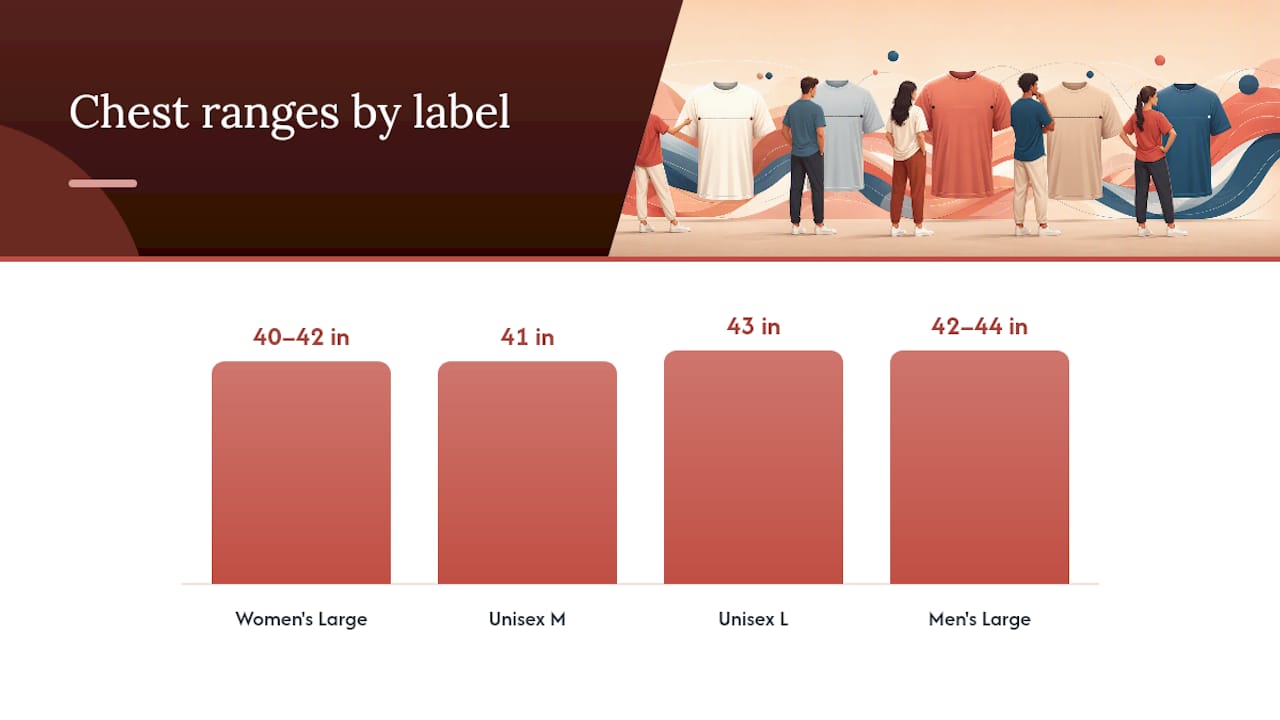
| Label type | Approximate chest range | Conversion note |
|---|---|---|
| Women’s small | 36 in | Roughly matches unisex XS in chest inches |
| Women’s medium | 37 in | Roughly matches unisex S in chest inches |
| Women’s large | 40–42 in | Roughly matches unisex M in chest inches |
| Men’s medium | 38 in | Roughly matches unisex M directly |
| Men’s large | 42–44 in | Roughly matches unisex L directly |
Unisex garments graded on a men’s block tend to run broader in the shoulders and longer in the torso than a women’s cut carrying the same letter, which is exactly why the one-letter-down rule exists for women who want something other than a boyfriend-tee look.
Here’s how that plays out with two real shoppers:
A woman who normally wears a women’s large (40 to 42 inch chest) and wants a tailored feel. She measures her chest at 41 inches, checks the unisex chart, and finds that range sits at unisex medium. Because she wants tailored rather than boxy, she sizes down again to unisex small, accepting a slightly closer fit through the body.
A man who wears a men’s large (42 to 44 inch chest) and wants something between fitted and relaxed. He measures 43 inches, which lands squarely in unisex large. He keeps that size rather than adjusting, since men’s and unisex charts usually align directly at the same letter.
Brand variance changes these numbers more than most shoppers expect. A size chart with actual chest and waist ranges beats guessing from letters alone, especially since one brand’s medium can run a full inch narrower than another’s.
How to Measure Yourself for the Right Unisex Size
Grab a soft tape measure and check these four points before you compare anything to a size chart:
- Chest: wrap the tape around the fullest part of your chest, staying level under your arms. This is your primary number.
- Shoulder span: measure from the edge of one shoulder to the other, across your back.
- Body length: measure from the highest point of your shoulder straight down to where you want the hem to fall.
- Sleeve length: for short sleeves, measure from the shoulder seam to where you want the sleeve to end on your arm.
If you’re checking a shirt instead of your body, lay it flat and measure armpit to armpit, then double that number for the chest circumference. Brands publish flat measurements exactly this way, so matching your own flat-lay number to the chart is more reliable than trying to eyeball fit from a photo.
When chest and shoulder measurements point to two different sizes, prioritize chest for a relaxed or boxy look and shoulder width for anything meant to sit close to the body. A tee that’s slightly loose through the body but fits the shoulders correctly looks intentional; one that’s tight in the shoulders but loose everywhere else looks like a mistake.
Pro Tip: Pull out a tee you already own that fits the way you want, lay it flat, and measure armpit-to-armpit and shoulder-to-hem. Compare those two numbers directly against the brand’s flat measurement chart instead of relying on the size label. This trick works even across brands you’ve never ordered from, since flat-lay comparisons strip out marketing differences in what “medium” means.
For a deeper walkthrough with photos, Thepreciouslamb’s guide on how to measure your chest for shirts covers the same four points in more detail.
Unisex T-Shirt Size Chart (XS to 3XL)
Here’s a standard flat chest measurement range you’ll see across most unisex tee blanks, useful as a baseline before checking any individual brand’s specific numbers:
| Size | Chest (flat, inches) | Chest circumference (inches) |
|---|---|---|
| XS | 16 | 32 |
| S | 17 | 36 |
| M | 19 | 38 |
| L | 21 | 42–44 |
| XL | 23 | 46 |
| 2XL | 25 | 50 |
| 3XL | 27 | 54 |
To use this chart, take your flat-lay measurement (or your body chest measurement) and find the closest range. Then apply the sizing rules from earlier: stay put if you want the fit as charted, size down for tailored, size up for oversized.
A few things to keep in mind as you cross-reference this against any brand’s own listing:
- These ranges reflect common industry averages, not one specific brand’s exact chart.
- Adding an inch or two of “ease” beyond your body measurement is normal and intentional in unisex patterns.
- Sizing up two letters (not just one) typically signals a deliberately oversized, streetwear-style fit rather than a standard relaxed cut.
Fabric choice changes how these numbers hold up after washing. Cotton blanks that aren’t pre-shrunk can lose a modest amount of length and width after the first wash, which matters more on a fitted cut than a relaxed one where a little shrinkage barely registers. If you’re deciding between a fitted and relaxed finish on a cotton blank, factor in that the fitted option has less room to give before it starts feeling tight.
Blank style also matters more than shoppers expect. A retail-fitted blank runs slimmer through the body than a classic boxy blank, even when both are labeled the same letter size. Thepreciouslamb’s Unisex Vintage Wash Boxy Raw Hem Denim T-Shirt publishes exact flat measurements for this reason. You’re comparing real numbers, not guessing from a label that means something different on every blank.
How Do You Choose Between Slim, Regular, and Relaxed Unisex Fits?
Your desired silhouette should drive the final size decision more than the label on the chart. Here’s the practical breakdown:
- Slim or fitted: size down one letter from your converted size, and expect noticeably less room through the chest and sleeves.
- Regular or classic: stick with the size the chart converts you to based on chest measurement alone.
- Relaxed or oversized: size up one to two letters, prioritizing chest and body length over shoulder fit.
Run through this decision flow before you check out:
- Confirm your chest measurement against the flat chart.
- Check whether the shoulder width at that size feels right for your frame, not just the chest.
- Consider the blank. A heavier fabric drapes differently than a lightweight tee, so a heavyweight blank in your usual size might feel more substantial than a lighter one in the same letter.
- Pick the final size. If you’re still unsure, size up. An oversized tee is easier to style intentionally than a too-tight one is to fix.
Blank weight changes this calculation more than most buying guides admit. A fitted blank built along the lines of Bella+Canvas-style construction sits closer to the body at every size, while a classic boxy blank runs looser at the same label. If you’re ordering Thepreciouslamb’s Boxy Heavyweight Short Sleeve Shirt, expect more room at your converted size than you’d get from a slimmer blank.
For team or bulk orders, include these details in your cart notes: preferred fit (slim, regular, relaxed), a couple of model measurements for reference, and a request for a sample run before committing to full quantities. Ordering samples for runs over twenty pieces catches fit surprises before they turn into a pile of returns.
Common Unisex Fit Problems and How to Fix Them
Even with a good measurement, a few fit issues show up repeatedly. Here’s what to do about each one.
- Shoulders too wide: this usually means you need to size down, not size differently. A wide shoulder seam can’t be fixed with hemming.
- Chest too tight: size up one letter, or switch to a blank known to run more relaxed at the same label.
- Body too long: hem the shirt at home or have it tailored. This is one of the easiest and cheapest fixes on the list.
- Sleeves too long: roll them once for a casual look, or have them shortened professionally for a cleaner finish.
- Neckline too snug: this typically signals you’re a size down from where you should be; check your chest measurement again.
Alter for length and sleeve issues since both are simple, low-cost fixes. Reorder instead of altering when shoulders or chest circumference are wrong. No amount of tailoring fixes a shoulder seam that sits an inch too far out.
For team purchases, order one or two sample sizes before committing to a full batch. It costs a little more upfront but avoids the far bigger cost of reordering fifty shirts in the wrong size.
Thepreciouslamb’s Take on Unisex Fit
We build our unisex tees around the same men’s block logic every credible blank uses, but we publish full flat measurements and photographed fit notes on every product page instead of leaving you to guess from a size label. That transparency matters more than the marketing copy most brands lean on.
Take the Unisex Boxy Heavyweight Short Sleeve Shirt as an example. It’s cut with a deliberately boxy, heavyweight silhouette, which means it runs roomier than a fitted blank at the same labeled size. If you’re used to slimmer tees, sizing down one letter from your usual unisex size gets you closer to a regular fit rather than the boxy look it’s designed for.
We use ethically sourced materials and stand behind the construction of every piece we sell… Check the measurement table on any product page before you buy, especially if you’re between two sizes.
Find Your Fit With Thepreciouslamb
Most sizing guides tell you what a chart means; ours also shows you exactly what you’ll get, because every product page carries flat measurements and photographed fit notes instead of a single vague size label. That’s the real gap between guesswork and a shirt that fits the way you expected when it arrives.

Start with the Unisex Raglan Sleeve Mesh Boxy T-Shirt if you want a boxy silhouette with full flat measurements listed before you buy, or check the Contrast Striped Lapel Collar Sweatshirt if you’re building out a layered look around your tee. Planning a team or group order? Request sample sizes before committing to quantity so nobody ends up stuck with a shirt that doesn’t fit. Pull up the size chart on any product page now, measure yourself against it, and order the size that matches your actual numbers instead of the label you’d normally reach for.
Where to Read More on Unisex Sizing
A few resources worth bookmarking if you’re still comparing sizes across brands: the unisex size converter from Arklavo for chest-based conversion logic, T-Shirt Elephant’s sizing guide for shrinkage and blank differences, Wearcrafft’s breakdown of unisex versus gendered sizing tradeoffs, and DeSoto Sport’s size chart as a clean chest-range reference.
For measuring yourself directly, Thepreciouslamb’s chest measurement guide walks through the same steps covered above, and the oversized t-shirt buying guide digs deeper into relaxed and boxy silhouette choices.
Sources
- Unisex Size Chart & Converter: Men’s & Women’s Sizing – Arklavo
- T-Shirt Size Chart 2026: Men, Women, Youth Sizing Guide | T-Shirt Elephant
- Unisex Sizing vs. Men’s and Women’s Sizing: What Shoppers Need to Know - Wearcrafft
- Unisex Size Chart — DeSoto Sport