
Pigment dyeing coats the outside of a finished garment for a faded, vintage look. Garment dyeing soaks into the fibers for a softer, more even color that tends to last longer wash after wash.
Pick pigment-dyed if you want a worn-in, weathered look right off the rack and don’t mind paying less. Pick garment-dyed if softness and long-term color retention matter more to you than a distressed finish. Keep reading and you’ll be able to spot the difference on a hanger, care for either type properly, and know what to ask before you order printed apparel.
Key Takeaways
Garment dyeing bonds color into the fiber for lasting softness, while pigment dyeing coats the surface for a cheaper, faster vintage look.
| Point | Details |
|---|---|
| Process difference | Pigment sits on the surface with a binder; garment dye soaks into the fiber itself. |
| Look and feel | Pigment-dyed pieces look faded and feel stiffer at first; garment-dyed pieces feel soft immediately. |
| Colorfastness | Garment-dyed pieces hold color longer once past the first few washes. |
| Identification | Turn the garment inside out; a lighter interior almost always signals pigment dye. |
| Shop the difference | Thepreciouslamb lists dye method on product pages, including vintage wash denim jackets and garment-dyed fleece. |
Table of Contents
- What Is Pigment Dyeing? Process, Look, and Trade-Offs
- What Is Garment Dyeing? Process, Look, and Trade-Offs
- Pigment Dye vs Garment Dye: How Do They Compare?
- How Can You Tell Which Dye Method Was Used?
- How Should You Wash and Care for Dyed Garments?
- What Should You Know Before Printing on Dyed Blanks?
- Which Dye Method Fits Your Wardrobe?
- Find Garment-Dyed and Vintage-Wash Styles at Thepreciouslamb
- Frequently Asked Questions
- Sources
What Is Pigment Dyeing? Process, Look, and Trade-Offs
Pigment dyeing happens after the garment is sewn. A pigment and binder mix gets applied to the fabric’s surface, then cured, usually with heat or a tumble-dry cycle. The pigment never actually penetrates the yarn. It sits on top, held there by the binder, which is why pigment-dyed pieces often go through a cationic pretreatment rinse, an acid wash, and an enzyme rinse to get that broken-in texture before they ever leave the factory, according to Screenprinting.
That surface application is exactly why pigment-dyed shirts look weathered and slightly faded even when brand new. Color reads about 10% less saturated than a comparable garment-dyed piece, and the hand starts out a bit stiffer before it relaxes with wear and washing.
- Lower production cost than garment dyeing, which usually means a lower price tag for you
- Vintage, lived-in look without waiting years for the fabric to actually break in
- Pigment can rub off or fade faster since it never bonds with the fiber itself
- Interior seams and ribbing often stay lighter because pigment struggles to reach tucked fabric
Pro Tip: Expect a little color to release in the first two or three washes. That’s normal for pigment-dyed pieces. Wash separately until the water runs clear, then treat it like any other garment.
What Is Garment Dyeing? Process, Look, and Trade-Offs
Garment dyeing means the entire piece, already cut and sewn, goes into a dye bath as a finished product. Dye molecules bond with the fiber itself rather than sitting on top of it, which is what gives garment-dyed clothing that soft, broken-in feel from the very first wear.
Because the color soaks all the way through, garment-dyed pieces show subtle tonal variation at seams and ribbing where fabric layers absorb dye slightly differently. That’s not a flaw. It’s part of the appeal, and it’s one reason streetwear labels favor the method even though it costs more per piece than piece-dyeing pre-colored fabric.
- Softer hand immediately, with color that reaches seams, ribbing, and interior fabric
- Stronger long-term colorfastness once the piece gets past its first couple washes
- Small color variation between batches, since dye uptake shifts slightly by garment
- Higher per-unit cost and typically higher minimum order quantities for brands
Pro Tip: If you need exact color matching across a large order, ask about piece-dyed or pre-dyed fabric instead. Garment dyeing’s natural variation makes it a poor fit when uniformity matters more than character, as Makers Row notes for brand owners.
Pigment Dye vs Garment Dye: How Do They Compare?
Here’s how the two methods stack up across the things that actually affect your shopping decision.
| Dimension | Pigment-dyed | Garment-dyed |
|---|---|---|
| Look / color depth | Faded, weathered, lower saturation | Fuller, more saturated color |
| Feel / hand | Stiffer at first, softens with wear | Soft and broken-in from day one |
| Colorfastness / fading | Fades faster, pigment can rub off | Holds color longer once set |
| Inside vs outside color | Interior often lighter than exterior | Color reaches seams and ribbing evenly |
| Printing / dye migration | Higher risk of ink bleed and migration | Lower risk once properly rinsed |
| Cost / MOQ | Cheaper, lower minimums | Pricier, often higher minimums |
| Best for | Tees, hoodies wanting a vintage finish | Fleece, hoodies, denim wanting softness |
In the first one to three washes, pigment-dyed garments shed a little surface color into the water, so wash them alone until it runs clear. Garment-dyed pieces can bleed slightly too, but the color loss tapers off faster since it’s bonded into the fiber rather than sitting on top of it.
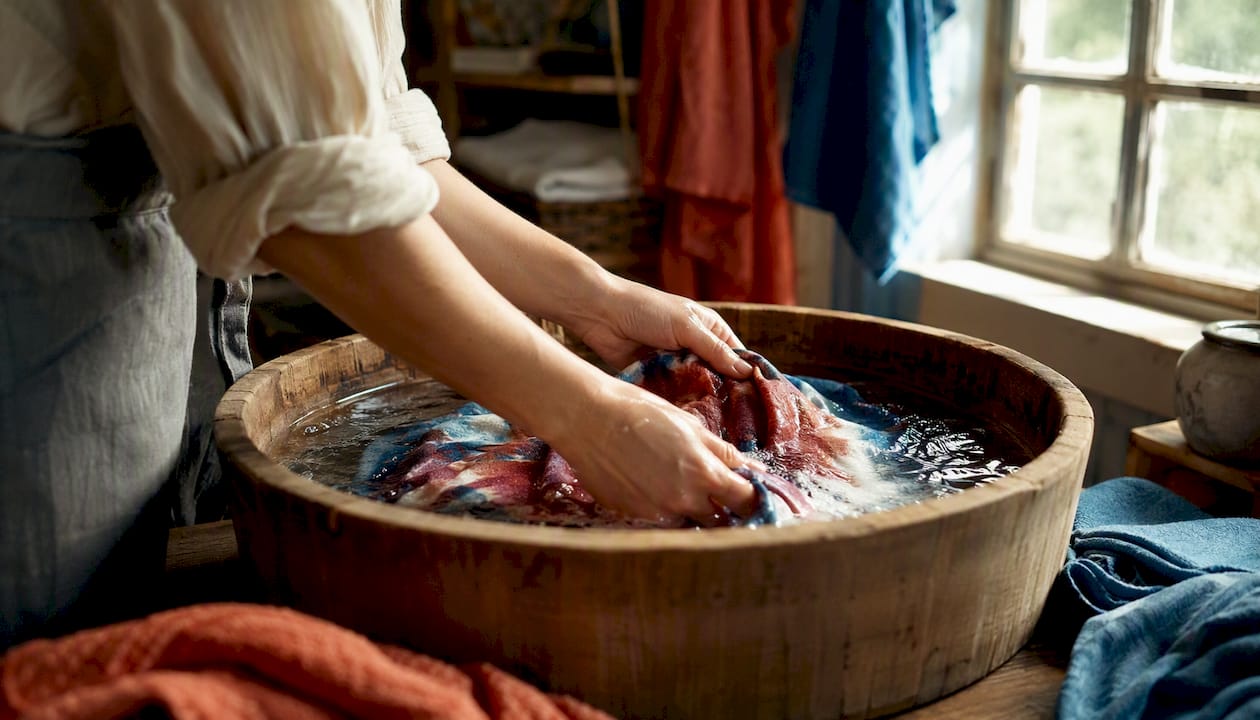
If you actually want visible variation piece to piece, garment dyeing delivers that character. If you’re ordering multiples and need every unit to match, lean toward pre-dyed fabric or piece dyeing instead of either method.
How Can You Tell Which Dye Method Was Used?
A quick physical check tells you more than any tag ever will.
- Turn the garment inside out. If the interior is noticeably lighter than the outside, it’s pigment-dyed.
- Feel the fabric. Stiffer, papery texture usually points to pigment dye that hasn’t softened with washing yet.
- Rub a damp white cloth on the fabric. If color transfers immediately, you’re likely looking at a pigment-dyed piece.
Product descriptions sometimes spell this out directly. When they don’t, a quick message to the brand asking about dye method is a fair question, and any brand confident in its process should answer it without hesitation.
How Should You Wash and Care for Dyed Garments?
Wash any newly dyed garment alone or with similar colors for the first few cycles, in cool water, without soaking. Soaking gives loose pigment or dye more time to bleed into everything else in the load. Once the water runs clear after a wash, you can fold the piece into a regular laundry rotation.
- Use a mild detergent and skip the bleach, which strips both pigment and fiber-bonded dye
- Wash in cold water and air-dry when possible to slow fading and prevent shrinkage
- Pigment-dyed pieces need more early caution since surface color releases faster than fiber-bonded dye
- Garment-dyed pieces bleed a bit at first too, but color loss slows down once the initial rinse cycles pass
Pro Tip: Turn dyed garments inside out before washing to reduce surface friction against other fabric, which cuts down on both fading and dye transfer. For more on gentle washing technique that extends garment life, this guide to washing delicate fabric covers habits that apply well beyond one category of clothing.
What Should You Know Before Printing on Dyed Blanks?
Pigment-dyed blanks are more prone to dye migration, where residual dye bleeds up through screen print ink during curing and discolors light-colored designs. Printers typically counter this with low-bleed inks, poly-white bases, or a dedicated dye-blocker layer under the print.
Garment-dyed blanks generally print cleaner since the dye is locked into the fiber rather than sitting loose on the surface, but proper curing still matters for both.
- Ask your printer whether they use low-bleed or dye-blocking bases for pigment-dyed orders
- Confirm cure temperature and time match the blank’s dye method, not just the ink type
- Request a test print on the actual blank before running a full batch
Pro Tip: If you’re ordering printed pigment-dyed shirts, specify a dye-blocker base up front. It’s cheaper to ask before printing than to reprint a bled batch.
Which Dye Method Fits Your Wardrobe?
Match the method to what you actually care about most.
- Want immediate softness and a piece that holds its color for years? Choose garment-dyed.
- Want a vintage, faded look without the higher price tag? Choose pigment-dyed.
- Planning to print your own designs? Garment-dyed blanks or pigment-dyed with dye-blocker ink both work, but ask your printer first.
- Ask yourself: Do I want texture now, or softness that builds over time?
- Ask yourself: Am I okay with slight color variation between batches?
- Ask yourself: Will this piece get printed, and does the printer know how to handle the dye method?
Plenty of closets have room for both. A pigment-dyed hoodie for weekend wear and a garment-dyed pair of jeans for everyday softness aren’t competing choices. They’re just doing different jobs.
How We Choose Dyed Pieces for Our Collection
We weigh look, hand, and durability together, not separately, when picking dyed pieces for Thepreciouslamb. Our product pages note dye method whenever it shapes how a piece looks or wears.
Find Garment-Dyed and Vintage-Wash Styles at Thepreciouslamb
If the side-by-side above left you leaning toward that soft, lived-in feel, our vintage wash zip denim jacket and vintage washed cropped fleece hoodie both use the fiber-deep dyeing method covered in this guide, so the softness and color depth are built in, not added later.

Every product page at Thepreciouslamb lists the dye method and care instructions up front, so you’re never guessing how a piece will wash or wear before you buy it. If a faded, weathered finish is more your speed instead, the denim vintage washed heavyweight jacket delivers that texture without the higher price tag garment dyeing carries. Browse either collection and check the product description for the dye details before you check out.
Frequently Asked Questions
Is garment-dyed or pigment-dyed better? Neither is universally better. Garment-dyed wins on softness and long-term colorfastness. Pigment-dyed wins on vintage texture and price. Your priorities decide which is right.
Does pigment dye wash out? Some surface pigment releases in the first few washes since it isn’t bonded to the fiber. After that initial rinse period, color loss slows down significantly.
Can you print on pigment-dyed shirts? Yes, but printers typically need low-bleed or dye-blocking inks to prevent dye migration from bleeding into the design during curing.
What’s the difference between piece dyed and garment dyed? Piece dyeing colors fabric before it’s cut and sewn, giving very consistent color across a batch. Garment dyeing colors the finished piece, which produces more natural variation but less uniformity.
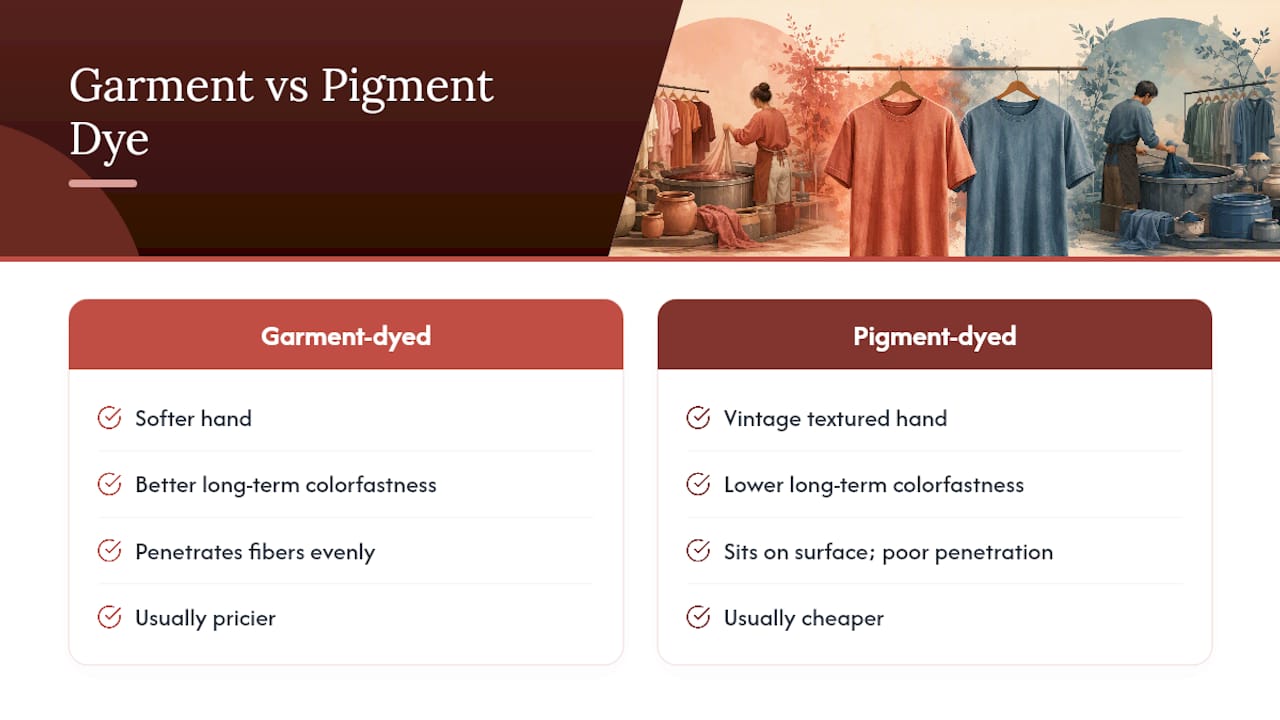
Why does the inside of my shirt look lighter than the outside? That’s a sign of pigment dyeing. Pigment sits on the fabric surface and struggles to fully reach interior seams and ribbing, while garment dye penetrates evenly throughout.
Sources
- What Is Garment Dyeing? Guide For Brand Owners (2026)
- Screenprinting
- Garment vs. Pigment Dyed T-Shirts
- Garment Dye | Streetwear Glossary | Streetwear Directory
Recommended
- Christian Clothing Brands for Stylish, Ethically Minded Shoppers – THE PRECIOUS LAMB
- Sweatshirt vs Sweater: What Streetwear Shoppers Need to Know – THE PRECIOUS LAMB
- Everlane Alternatives: Ethical Brands Worth Switching To – THE PRECIOUS LAMB
- Best Capsule Wardrobe Brands for Quality and Style – THE PRECIOUS LAMB