
Skip sizing up if the hoodie is already labeled oversized. Order your regular size and let the drop-shoulder pattern do the work. Size up only on a regular-fit hoodie when you want extra length or a looser, more relaxed feel, and even then, check the chest measurement first. Fabric matters too: heavyweight cotton holds an oversized shape, while thin blends just look sloppy in a bigger size.
TL;DR:
- Do not size up for an already oversized hoodie, as the pattern is designed to be roomy without additional sizing.
- Heavier fabrics like heavyweight cotton hold their shape better when sized up, while thin blends tend to look sloppy if oversize.
- Measuring a hoodie flat on a surface is more reliable than relying on letter sizes or body measurements, especially for chest and length.
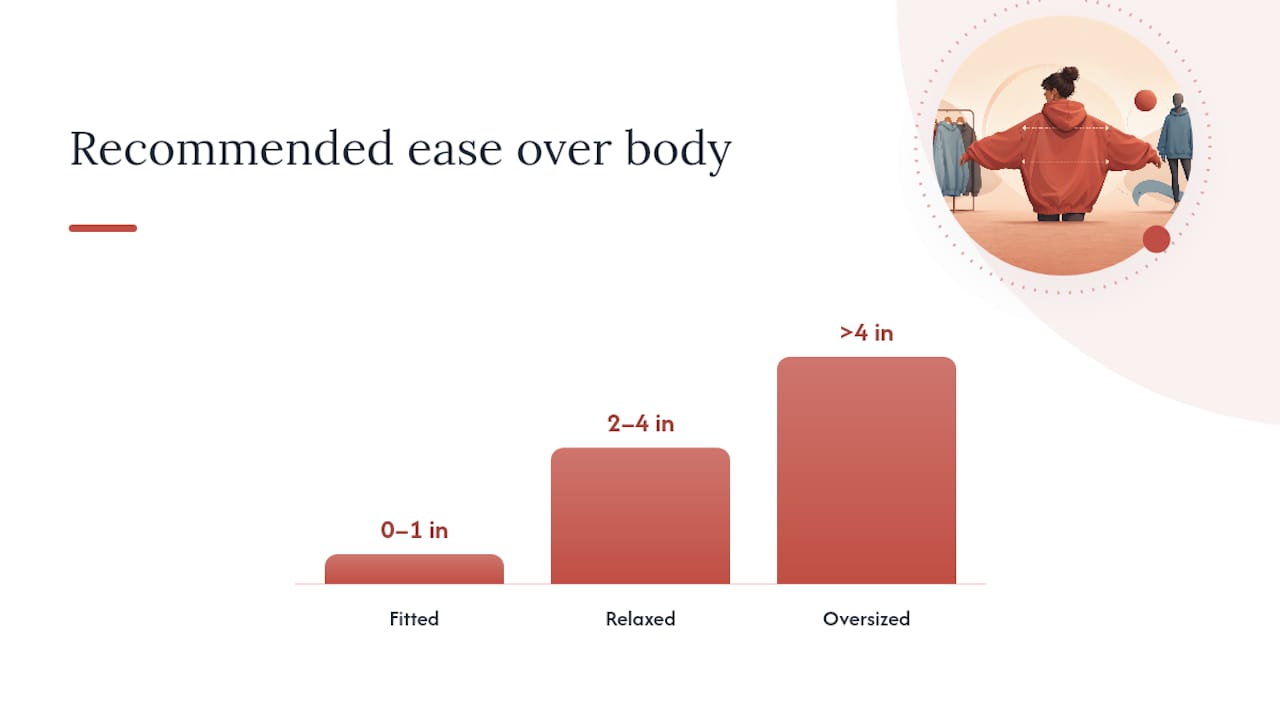
- For a fitted look, aim for zero to one inch of ease over your chest measurement, and for a relaxed fit, target two to four inches of ease.
- Check garment measurements and reviews carefully, especially noting fabric weight and shrinkage tendencies, before selecting your size.
Table of Contents
- Regular, Relaxed, or Oversized: Why the Fit Type Changes Everything
- How to Measure a Hoodie Before You Buy
- What Should a 5’7" Shopper Check Before Ordering?
- Does Fabric Weight Change Whether You Should Size Up?
- The Six-Point Checklist to Run Before You Order
- How Thepreciouslamb Documents Fit on Every Product Page
- Why Measuring Beats Guessing on Letter Size
- Find Your Fit With Thepreciouslamb’s Hoodie Collection
- Sources
- FAQ
Regular, Relaxed, or Oversized: Why the Fit Type Changes Everything
Buying a hoodie one letter size up doesn’t automatically turn a regular fit into an oversized one. Those are two different patterns, not two points on the same size scale.
A regular fit follows your actual shoulder line and tapers close to the body. Relaxed fit adds a little extra room through the body and sleeves without changing the shoulder seam. Oversized fit is a different cut entirely. It drops the shoulder seam well below your natural shoulder and widens the chest considerably compared to the same labeled size in a regular pattern, according to Three Layers’ fit guide. That means an oversized small can measure the same across the chest as a regular large.
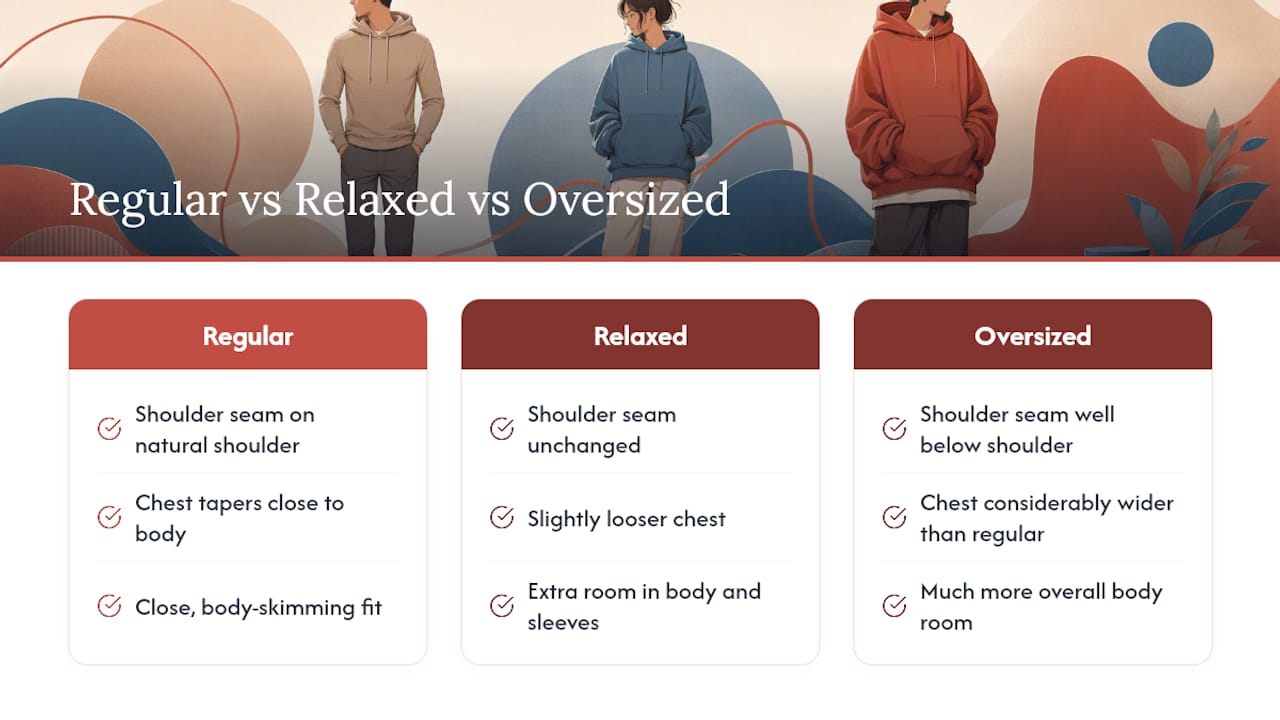
When you size up a regular hoodie instead of buying an actual oversized cut, most brands add length and a bit of girth, but the shoulder seam stays put. You end up with a hoodie that hangs long and sits oddly at the shoulder rather than draping the way a true oversized piece does. Fabric weight decides whether that extra room reads as intentional or just baggy. A heavier, structured fleece holds its shape when you go up a size. A thin, stretchy blend collapses and looks like you grabbed the wrong size by mistake.
How to Measure a Hoodie Before You Buy
Letter sizes lie. Chest inches don’t. Grab a hoodie that already fits the way you like and measure it flat on a table, from armpit seam to armpit seam. That’s your pit-to-pit measurement. Double it, and you’ve got the actual chest circumference, which you can compare directly against any product page.
Once you have that number, here’s what to check on the item you’re considering:
- Chest width: measured pit-to-pit and doubled, this tells you how much room you’ll have across the torso.
- Body length: measured from the highest point of the shoulder down to the hem, this determines where the hoodie ends on your body.
- Sleeve length: measured from the shoulder seam to the cuff, this matters more for layering than most people expect.
Aim for 0 to 1 inch of ease over your body measurement if you want a fitted look, and 2 to 4 inches of ease for something relaxed. Go higher than that only if you’re specifically chasing an oversized silhouette. Hoodie sizing guides consistently point to measuring a favorite garment over guessing from body measurements alone, since posture, brand cut, and shrinkage all skew the numbers.
Most unisex hoodies are built on men’s sizing. Women shopping unisex racks typically size down one from their usual women’s size for a closer fit, or keep the men’s size as listed if they want that boxier, borrowed-from-the-boyfriend look.
Pro Tip: Keep a small tape measure in your bag or car. Measuring a hoodie you already own takes 30 seconds and saves you from a return two weeks later.
For a step-by-step walkthrough with photos, Thepreciouslamb’s hoodie sizing guide covers the same pit-to-pit method in more detail.
What Should a 5’7" Shopper Check Before Ordering?
Height matters less than most people think. Chest width and body length do the real work of deciding how a hoodie looks on you.
If you’re chasing a boxy streetwear look, target a chest measurement 4 or more inches wider than your actual chest, paired with a body length that lands at or slightly below the hip. If you want something closer to fitted, stick to 0 to 2 inches of ease and a length that ends around the waistband.
For someone around 5’7", here’s what actually matters at checkout:
- Check the body length spec against where you want the hem to sit. A hoodie built for someone 6 feet tall can run past the hip on a shorter frame.
- Prioritize chest measurement over height. Two people at 5’7" can need different sizes depending on build.
- If the length feels too long in the size that fits your chest, consider a size down in an oversized style, since the drop shoulder still gives room without the extra length.
- Leave room in the shoulder and upper arm if you plan to layer a jacket over it. Tight armholes make layering miserable.
Shirt size doesn’t always translate cleanly, either. If you wear a medium in fitted tees but prefer loose hoodies, you might land in a large or extra large depending on the brand’s cut. Measurements settle the question faster than guessing from memory.
Does Fabric Weight Change Whether You Should Size Up?
Yes, and it’s one of the most overlooked parts of hoodie sizing advice. The fabric decides whether a bigger size looks intentional or just loose.
Heavyweight cotton fleece, generally in a heavier fabric weight range, holds structure well enough to support an oversized silhouette without collapsing into folds. Lighter fabrics tend to drape flat and read as loungewear rather than the boxy, sculpted look oversized pieces are going for, per Topology Apparel’s sizing breakdown.
Blend matters too:
- 100% cotton shrinks the most, often 3 to 5% in length and width after a hot wash and dry cycle.
- Cotton-poly blends shrink less and hold their printed dimensions closer to what’s listed on the tag.
- Blends with elastane resist shrinkage almost entirely but can lose structure over repeated washes.
If you’re buying 100% cotton and love the fit right out of the package, sizing up slightly or washing cold and air drying protects that fit long term. Thepreciouslamb’s hoodie care guide walks through wash temperature and drying steps that keep fleece from tightening up after a few cycles.
The Six-Point Checklist to Run Before You Order
- Read the fit label first. Oversized, regular, and slim are different patterns, not different sizes of the same shape.
- Compare your pit-to-pit measurement to the chest spec. Target 2 to 4 inches of ease for relaxed, 0 to 1 inch for fitted.
- Factor in fabric. High-shrink 100% cotton may justify sizing up if you want to bank some length and width for after the first wash.
- Skip sizing up on already-oversized pieces. Order your usual size and let the drop shoulder do the styling.
- Check shoulder and sleeve room if you layer often. A snug armhole ruins an otherwise good fit.
- Scan reviews for repeated mentions of running big or shrinking. Consistent feedback from other buyers beats guessing from the size chart alone.
How Thepreciouslamb Documents Fit on Every Product Page
Thepreciouslamb lists chest width, body length, and sleeve length directly on hoodie product pages, alongside fit notes describing whether a style runs true to size, relaxed, or oversized. Garment measurements typically carry a small manufacturer tolerance, generally around plus or minus an inch, which is standard across the apparel industry.
Product pages also note the size worn by the model shown, giving you a real reference point instead of a guess. If you’re comparing across brands, Qahwat Al’Ard’s unisex hoodie listing is a useful side-by-side example of how another retailer displays the same kind of fit data.
For readers who want the measuring steps in more detail, Thepreciouslamb’s chest measuring guide breaks down the pit-to-pit method with visuals.
Why Measuring Beats Guessing on Letter Size
Most fit complaints trace back to one habit: shoppers compare letter sizes across brands as if a large means the same thing everywhere. It doesn’t. A large in one label’s regular fit can measure smaller than a medium in another label’s relaxed cut.
Measuring first cuts down on returns, and fewer returns means less shipping waste and fewer garments that end up unworn in a closet. Buying one hoodie that actually fits beats buying two because the first guess was wrong. That’s a better outcome for your closet and for the planet.
— Joshua
Find Your Fit With Thepreciouslamb’s Hoodie Collection
Some hoodie retailers list real garment measurements, not just S, M, or L, so you can size against actual inches instead of guessing. That’s the difference between ordering with confidence and rolling the dice on a return.

Start by browsing the hoodies and fleece collection, where each product page includes chest width, body length, and sleeve measurements alongside fit notes. If you want a true boxy silhouette, the Contrast-Stitched Boxy Fleece Zip Hoodie shows exactly how an oversized pattern is built, with full measurements listed on the page. Not sure which size fits your build? Email Thepreciouslamb’s support team with your pit-to-pit measurement and preferred fit, and they’ll help you land on the right size before you check out.
FAQ
Is It Better to Size Up for a Hoodie?
Only sometimes. Size up on a regular-fit hoodie if you want extra length or looseness, but keep your usual size when the hoodie is already labeled oversized, since the pattern itself provides the roomy fit.
Should a Hoodie Fit Tight or Loose?
That depends on the look you want and the fabric. A fitted hoodie should sit close with 0 to 1 inch of ease at the chest, while a relaxed or oversized style typically works best with 2 inches or more of extra room, especially in a heavyweight fabric that holds its shape.
What Size Hoodie Should I Get If I’m 5’7"?
Focus on chest measurement and desired body length rather than height alone. Check where the hem falls in your usual size, and size down within an oversized style if the length runs past your preferred hip position.
Should My Hoodie Size Match My Shirt Size?
Not necessarily. Hoodie fits vary more by brand and pattern than shirts do, so matching your shirt size can leave you with either a tight torso or excess length. Comparing garment measurements from Thepreciouslamb’s sizing guide against a favorite hoodie’s pit-to-pit measurement gives a more reliable answer than matching sizes across categories.