
The half tuck, also known as the French tuck, is a quick way to style a sweatshirt to look intentional rather than casual. It works well with mid or high rise jeans and sweatshirts that are not very bulky. For heavier or boxy sweatshirts, a side tuck is generally recommended instead.
TL;DR:
- Tucking works best with lightweight, shaped sweatshirts that hit at or above mid-hip on high- or mid-rise pants; heavier or boxy fabrics tend to look bulky.
- The French tuck is suitable for most tops, involving tucking three-quarters of the front while leaving the back loose, and it is easiest on lighter-weight fabrics.
- Side tucks are recommended for bulkier sweatshirts, twisting a small fabric section into a knot-like shape and tucking it into a single side for a cleaner silhouette.
- Full tucks are only effective with thin, smooth fabrics and should be evenly tucked around the waistband with a belt for sharpness; avoid textured or heavyweight materials.
- Proper tuck maintenance involves smoothing out fabric after sitting and choosing fitted layers underneath to prevent shifting, with thicker sweatshirts requiring additional fixes like safety pins or elastic loops.
Table of Contents
- When Should You Tuck In a Sweatshirt?
- How Do You Tuck a Sweatshirt? Step-by-Step for Every Method
- What to Wear With a Tucked Sweatshirt
- Fixing Bulk, Slipping, and Other Tuck Problems
- Sweatshirts From ThePreciousLamb That Tuck Well
- Why Most Tucking Advice Skips the Part That Actually Matters
- Sources
When Should You Tuck In a Sweatshirt?
Not every sweatshirt wants to be tucked, and forcing it usually looks worse than leaving it alone. The decision comes down to three quick checks: hem length, pant rise, and where you’re going.
Start with the hem. If your sweatshirt hits at or above mid-hip and has some shape to it (not a shapeless tent), tucking will define your waist and clean up the silhouette. If it hangs past your hip bones and reads as oversized or heavy, a full tuck will just create a fabric traffic jam at your waistband. In that case, either leave it untucked or go with a side tuck, which hides bulk near one hip instead of spreading it across your whole front.
Pant rise matters just as much as the sweatshirt itself. High-waisted or mid-rise bottoms are consistently the better partner for a tucked sweatshirt because the waistband sits at a natural point on your torso and gives the fabric something stable to grip. Low-rise jeans tend to let tucked fabric sag or peek out below the waistband within an hour of wearing them, which defeats the whole point.
Occasion is the last filter. A few examples make this concrete:
- Straight-leg jeans and a cropped or regular-fit hoodie: tuck it. This is the easiest win in casual dressing.
- Oversized heavyweight fleece and joggers: leave it out, or try a side tuck if you want a little waist definition without the bulk.
- Midi skirt and a lightweight crewneck: French tuck, every time. It’s what turns “sweatshirt with a skirt” into an outfit rather than an accident.
- Sweatpants or lounge pants: don’t tuck. There’s no elastic waistband alive that holds a tuck in place for long, and the effort isn’t worth it.
- Business casual with tailored trousers: a clean full tuck (thin fabric only) or French tuck reads intentional; a lumpy tuck reads sloppy.
If you’re ever unsure, the fit test is simple: pinch the fabric at your side seam. If it’s thin enough to fold flat between two fingers without much resistance, it’ll tuck cleanly. If it bunches into a thick wad, you’re either choosing the wrong tuck or the wrong sweatshirt for tucking at all.
How Do You Tuck a Sweatshirt? Step-by-Step for Every Method
There’s no single “correct” way to tuck a sweatshirt. Stylists generally work with four core methods, and which one you use depends on the sweatshirt’s weight, your pant rise, and how much waist definition you’re going for.
The French tuck (half tuck)
This is the technique to learn first because it works on the widest range of sweatshirts and body types. The French tuck involves tucking about three-quarters of the front of your top into your waistband while leaving the back completely loose, which creates the illusion of a waistline without the commitment of a full tuck.
- Unbutton or unzip nothing, just start with the sweatshirt hanging naturally.
- Find your front belt loops (or where they’d be) and use them as your center marker.
- Gather the front hem with both hands and tuck it into your waistband, working from the center outward, stopping just past each hip.
- Leave the back and the outer quarters on each side completely untucked.
- Smooth the tucked section flat with your palm, then gently pull a small amount back out to “blouse” it, so it doesn’t look stiff or overly tight.
- Check yourself from the side and back. If the untucked back is ballooning, tug a bit more fabric loose at the front to balance the proportions.
Lighter-weight tops tuck far more easily than chunky knits, so if you’re new to this, practice on a lightweight crewneck before attempting it with a cable knit or heavyweight fleece.
The side tuck
Stylists point to the side tuck as the go-to fix for anything with real bulk to it. The technique uses roughly a palm-sized amount of fabric, tucked in near your first belt loop on one side, rather than spreading fabric across the whole front.
- Pick a side, usually whichever side feels more natural or matches how your bag or jacket sits.
- Grab a palm-sized section of fabric near that side seam.
- Twist it very slightly, almost like starting a knot, then tuck it down into your waistband near the first belt loop.
- Let everything else hang loose and natural.
- Adjust until the twist disappears under the waistband and only a slight gather shows at the hip.
This one is forgiving. It hides a lot of bulk in a small space, which makes it the better default for a boxy zip hoodie or dense fleece pullover.
The full tuck
Reserve this for thin, smooth fabrics only. Take the entire hem of the sweatshirt and tuck it evenly around your whole waistband, distributing the fabric so no one section bunches more than another. A thin belt helps here, both to hold the tuck in place and to add a clean horizontal line. Skip the full tuck with anything textured or heavyweight. It will create a doughy silhouette instead of a sharp one.
The front/half tuck variation
This is essentially a looser cousin of the French tuck, popular with oversized sweatshirts. Instead of tucking three-quarters of the front, you tuck a smaller central section, maybe six to eight inches, right at the center front, and let the rest of the hem drape naturally over your hips. It gives just enough shape to break up an oversized silhouette without fighting the garment’s cut.
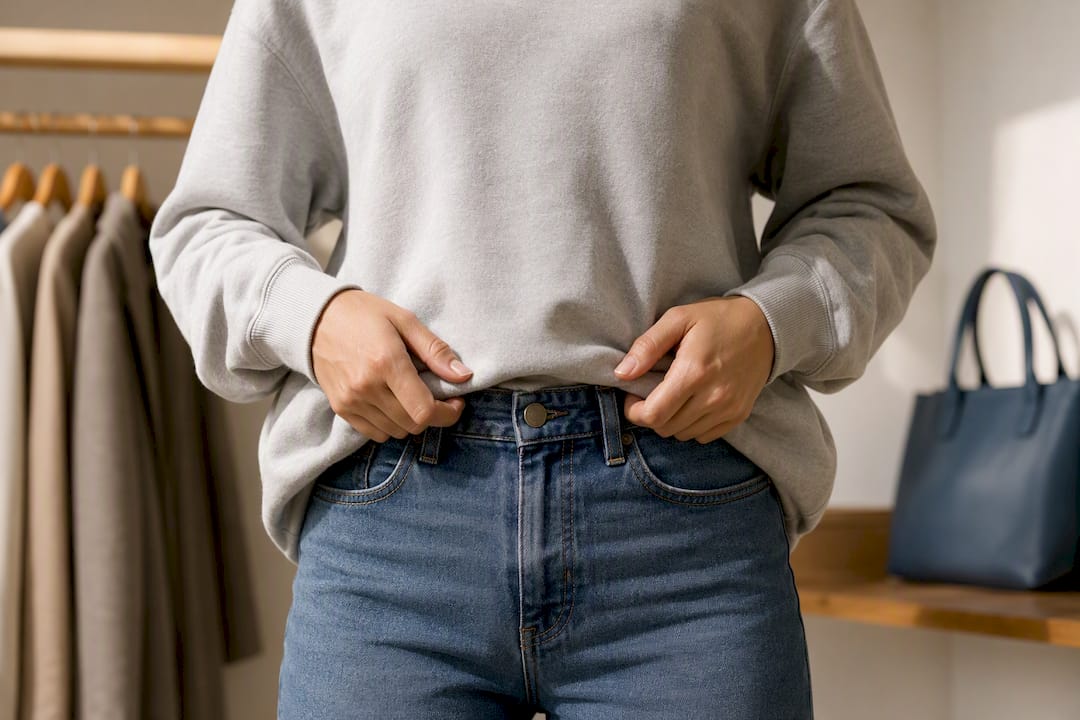
Pro Tip: Do the tuck, then sit down, stand back up, and check the mirror again. A tuck that only looks good standing still isn’t a tuck you’ll want to keep adjusting all day.
What to Wear With a Tucked Sweatshirt
The tuck is only half the outfit. What you pair it with decides whether the whole look reads as styled or just accidental.
Bottoms do the heaviest lifting here. High-waisted straight-leg jeans, tapered trousers, and mom jeans all give a tucked sweatshirt somewhere secure to land. Midi skirts with a defined waistband work the same way for a softer, more feminine combination. What doesn’t work: very low-rise jeans, which let tucked fabric slip out, and ultra-baggy bottoms, which compete with the sweatshirt for volume and leave you looking shapeless from every angle. Sweatshirts consistently pair best with mid to high-rise bottoms across most styling guidance, which is worth remembering before you reach for the lowest-rise denim in your closet.
Belts are optional but useful. A thin belt worn with a full tuck adds a clean line without adding bulk. A wider, statement belt works better with a French or side tuck, where it sits on top of the untucked portion and becomes a visible accessory rather than a functional one. If your sweatshirt fabric is already thick, skip the belt. It’ll just add another layer of bulk you don’t need.
Layering can either show off your tuck or hide it completely. Cropped jackets, denim jackets, and blazers that hit around hip level keep the tucked waistline visible, which is the whole point. Long coats bury the effect entirely, so if you’ve put in the effort to tuck, reach for structured, shorter outerwear instead, as recommended in How to Look Sexy But Stay Warm This Winter.
Shoes and accessories finish the look. Sneakers keep a tucked sweatshirt casual and easy; ankle boots push it toward smart-casual or even business-casual territory. Keep jewelry minimal. A relaxed sweatshirt with a clean tuck doesn’t need competing with a stack of chunky accessories. One good necklace or a simple watch does more work than five pieces layered on top of each other.
Fixing Bulk, Slipping, and Other Tuck Problems
Fabric choice causes most tuck failures before technique ever enters the picture. Fine-gauge cotton and lighter-weight blends tuck far more cleanly than heavy fleece, because thinner material folds flat instead of piling up in visible lumps. If you keep fighting the same lump at your waistband no matter how you adjust it, the sweatshirt itself, not your technique, is probably the problem.
That doesn’t mean thicker sweatshirts are off-limits. It means you need the right fixes.
- Hidden safety pin: pin the tucked section to your waistband or the inside of your pants from the inside, out of sight, to stop the tuck from working itself loose over the course of the day.
- Hair elastic trick: twist the excess fabric at your waist into a small bunch, wrap a hair elastic around it, and tuck that smaller mass under your waistband. Reducing bulk this way keeps thick sweatshirts from slipping or creating visible lumps.
- Roll the back hem under: if the sweatshirt has a banded hem that won’t lie flat, roll or fold that hem under before tucking the front to keep the back silhouette smooth instead of puffy.
- Fold excess fabric inward: before tucking, fold any extra width toward your body rather than letting it fan out. This keeps the tucked section narrow and flat instead of wide and bunched.
Choosing between a side tuck and a French tuck usually comes down to bulk. If your sweatshirt is heavier than a standard t-shirt, stylists recommend the side tuck for bulkier fabrics, and the French tuck for anything lighter or smoother, since spreading thick fabric across the whole front waistband almost always looks lumpy no matter how carefully you smooth it.
Maintenance matters too. Sitting down for an hour will loosen almost any tuck, so a quick smoothing pass after standing up keeps things looking intentional instead of rumpled. Wearing a slightly more fitted layer underneath, like a fitted tank or a thin long-sleeve tee, also gives the tucked fabric less room to shift around, which means less readjusting throughout the day. If you’re storing bulky sweatshirts between wears, proper folding also helps them hold their shape instead of stretching out at the hem, which makes tucking harder every time you wear them.
Pro Tip: If a sweatshirt refuses to tuck no matter what you try, check the hem. Ribbed or banded hems resist tucking far more than a raw or split hem, and no hack fixes that completely. Sometimes the honest answer is to leave that one untucked and save the tucking for a different piece in your closet.
Sweatshirts From ThePreciousLamb That Tuck Well
Not every sweatshirt is built for tucking, but a few silhouettes make it almost effortless. The Contrast Striped Lapel Collar Sweatshirt has enough structure through the shoulders to hold a French tuck cleanly, and its lighter-weight build means it folds flat instead of bunching. Pair it with straight-leg denim and it moves easily from a casual weekend to something closer to smart casual.
Cropped and semi-cropped fits solve most tucking problems before they start. The Snow Washed Distressed Panel Pocket Hoodie already sits higher on the body, so a French tuck only needs to manage a small amount of fabric. It works especially well with high-waisted trousers, following the same smart casual streetwear approach of pairing a relaxed top with a more structured bottom.
For anything boxier, like the Contrast-Stitched Boxy Fleece Zip Hoodie, skip the full tuck entirely and reach for a side tuck instead. Zip it a quarter of the way, tuck just one side, and let a denim jacket or cropped blazer do the rest of the styling work.
Some pieces are built with care that shows up in the details: clean stitching, fabric weights chosen for how they actually wear, and a design process shared openly through behind-the-scenes footage rather than left a mystery. That’s the kind of construction that makes a tuck hold its shape past the first hour, instead of fighting you all day.
Why Most Tucking Advice Skips the Part That Actually Matters
Most styling content treats the tuck like a purely visual trick, three photos and a caption, and moves on. That’s backwards. The technique is the easy part. What separates a tuck that looks styled from one that looks like an accident is almost always fabric weight and hem construction, not hand placement.
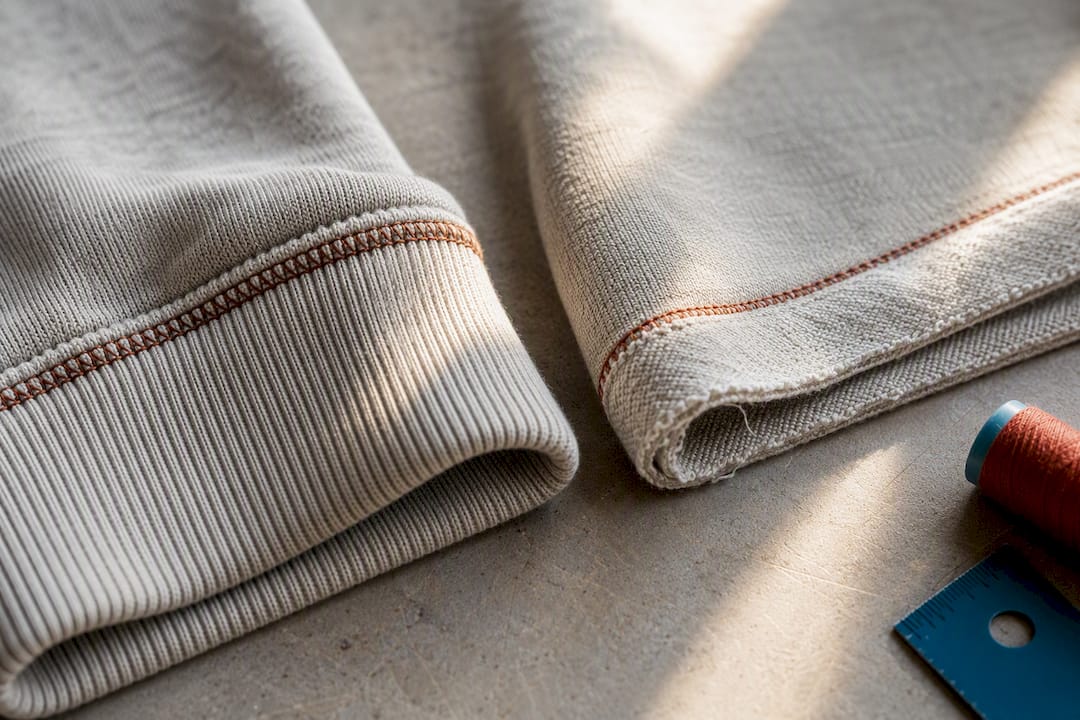
I’d argue the conventional advice undersells the troubleshooting side entirely. A hidden pin or a hair elastic sounds like a minor hack, but it’s often the difference between a tuck that survives a full day and one you’re readjusting every twenty minutes in a bathroom mirror. Readers don’t need five more photos of a French tuck. They need to know their heavyweight fleece pullover was never going to hold a full tuck in the first place, and that a side tuck would’ve solved the problem in ten seconds.
Start with the fabric, not the fold. Once you know what you’re working with, the technique takes care of itself.
— Joshua
Sources
Stylists at InStyle break down the French tuck and side tuck as the two core half-tuck methods, with clear guidance on when each works best. Gabrielle Arruda offers detailed side-tuck mechanics, including the palm-sized fabric measurement referenced above. WikiHow provides step-by-step visuals worth practicing with before attempting a tuck with heavier fabric. G-Heat covers the pant-rise fundamentals that determine whether any tuck holds.
- How to do a French tuck — Gabrielle Arruda
- The Art of Tucking Your Sweatshirt into Your Pants — g-heat
- How to wear a half-tucked shirt — InStyle
- How to French tuck — WikiHow